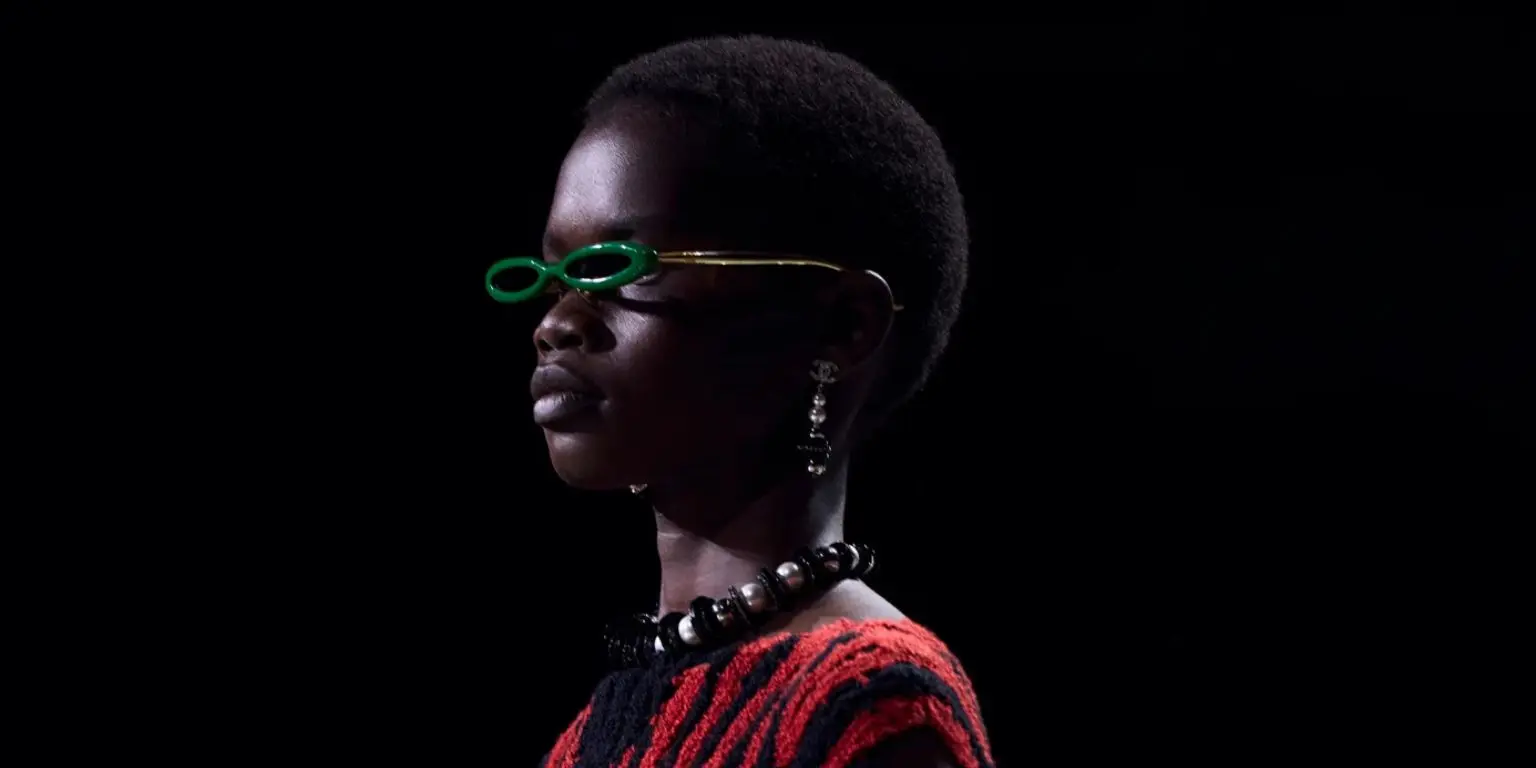
Anna Wintour had already seen it. And she called it exceptional. That was enough. This Paris Fashion week, for the Chanel F/W2026 show, Matthieu Blazy's second Ready-To-Wear collection for the Maison, under the iconic nave of the Grand Palais, a forest of giant technicolor Meccano cranes towered overhead, red, yellow, blue and green, designed in collaboration with Scenographer and Designer Richard Peduzzi, the man behind most of Director Patrice Chéreau's greatest productions including La Reine Margot.
A Chanel under construction. A new era announced in primary colors. And as the evening light faded and the cranes lit up one by one, the room understood exactly what Blazy was building. Margot Robbie, Jennie of Blackpink, Kylie Minogue, Oprah Winfrey, Lily-Rose Depp, Teyana Taylor, Angèle, Xavier Dolan, Astronaut Claudie Haigneré, Figure Skater Surya Bonaly, Principal Dancer Hannah O'Neill and Olympic Medalist Eileen Gu were all in their seats. Then the music started. And Chanel began its transformation.
From Caterpillar to Butterfly
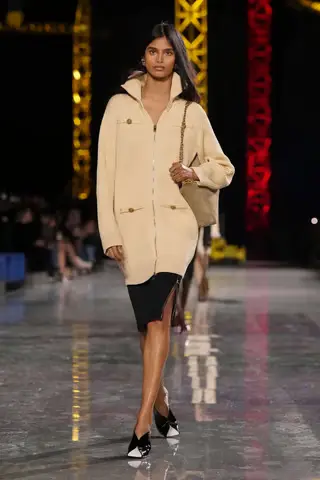
Blazy had found his inspiration in a Le Figaro article from the 1950s. A quote from Gabrielle Chanel herself: "Be a caterpillar by day and a butterfly by night. You need dresses that crawl and dresses that fly. The butterfly does not go to the market, and the caterpillar does not go to the ball." Simple, paradoxical and completely Chanel. And Blazy built his entire second chapter around it. Model Stéphanie Cavalli, the grey-haired Italian model who had already opened Chanel's Haute Couture show in January, stepped out first. Black ribbed knit tailleur, zipped jacket, patch pockets, gold buttons. Almost austere. Then came Model Bhavitha Mandava, the Indian model discovered in the New York subway and Chanel's newest ambassador, in the same spirit of precise, understated elegance. As Blazy explained backstage: "Stéphanie in her black tailleur? It's almost deceiving, almost too simple. Because in fact, her ease makes it extraordinary." The caterpillar had arrived. And the butterfly was already on its way.
The Tailleur, From Coco to Blazy
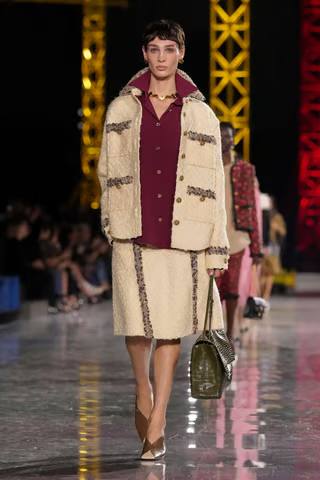
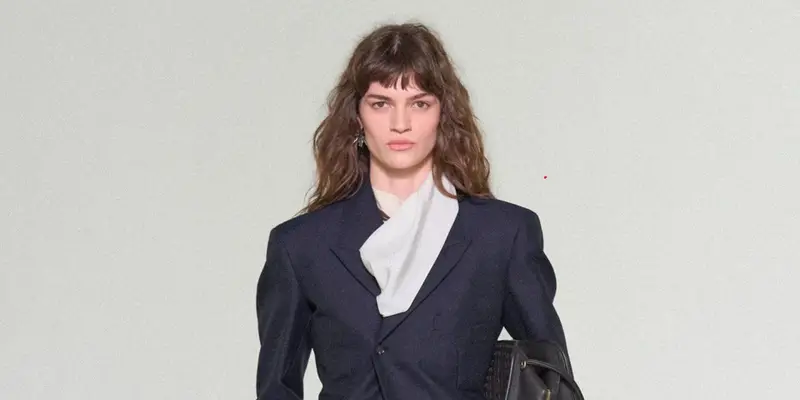
The iconic Chanel tailleur was Blazy's obsession and his playground. He took the classic four-pocket blazer and matching skirt and turned it into a shirt-jacket. Then a peacoat. Then a frock coat. He played with proportions and declined it in burnished gold, iridescent black and silver. Ribbed knits gave way to classic tweeds. Then to complex fabrics woven with lurex, silicone and natural gauze.
A 1920s silk jersey interlaced with tweed appeared. Pearl-woven knit tailored suits offered exceptional freedom of movement. And then a new silhouette arrived: large blazers paired with pleated skirts and men's belts worn very low on the hips, almost to mid-thigh. Blazy traveled through Chanel's history in a single collection. From Art Deco 1920s to the garçonne 1930s. From the austerity of the 1950s to the glamour of the 1960s. And arrived somewhere entirely his own. As he put it backstage: "There is a gold-painted gauze fabric on the wall of Gabrielle Chanel's apartment. For me that is the best definition of Chanel: she takes something poor and adds richness. She transforms working-class clothes into luxury." That is exactly what Blazy did here. And he made it look inevitable.
Chanel F/W2026 RTW- Paris Fashion Week
The Butterfly Lands
Blazy framed the collection with five classic black and ecru looks at the opening and two more at the very close. A knowing nod to the Chanel purist. A reminder that the classics are always there if you want them. But what the room will remember is the finale. It arrived like a wave. Sequined tartan patterns in fabulous dazzling tailored suits, shirt-jackets and sheaths. Metallic and fabric flowers exploding from every seam and surface. The impressionist iridescence of the set reflected in the pomaded, shimmering hair of a casting that ran from adolescence to the late fifties. The butterfly had finally arrived. And it was everything.
Blazy closed with Mark Lanegan on the soundtrack and sent his Chanel women into the Parisian night looking like they owned it. Because they did. This was the most phantasmagorical Chanel in recent memory. And it will go down as one of the defining shows of Paris Fashion Week this season.