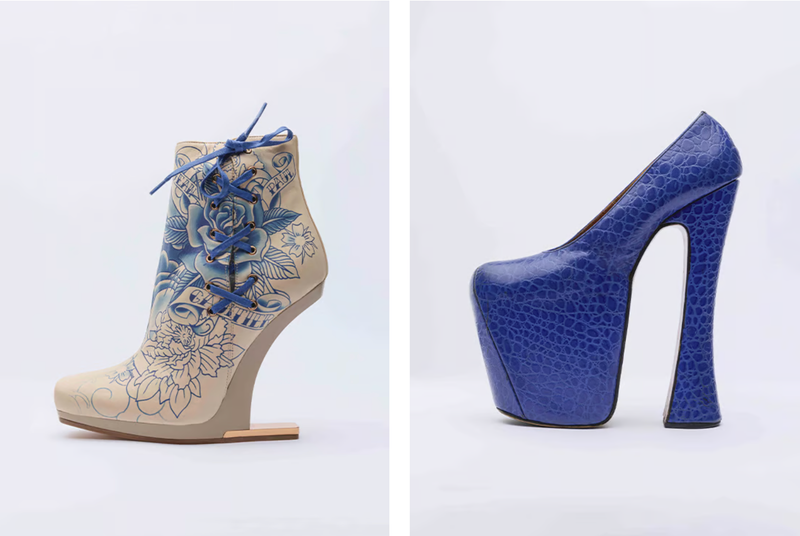
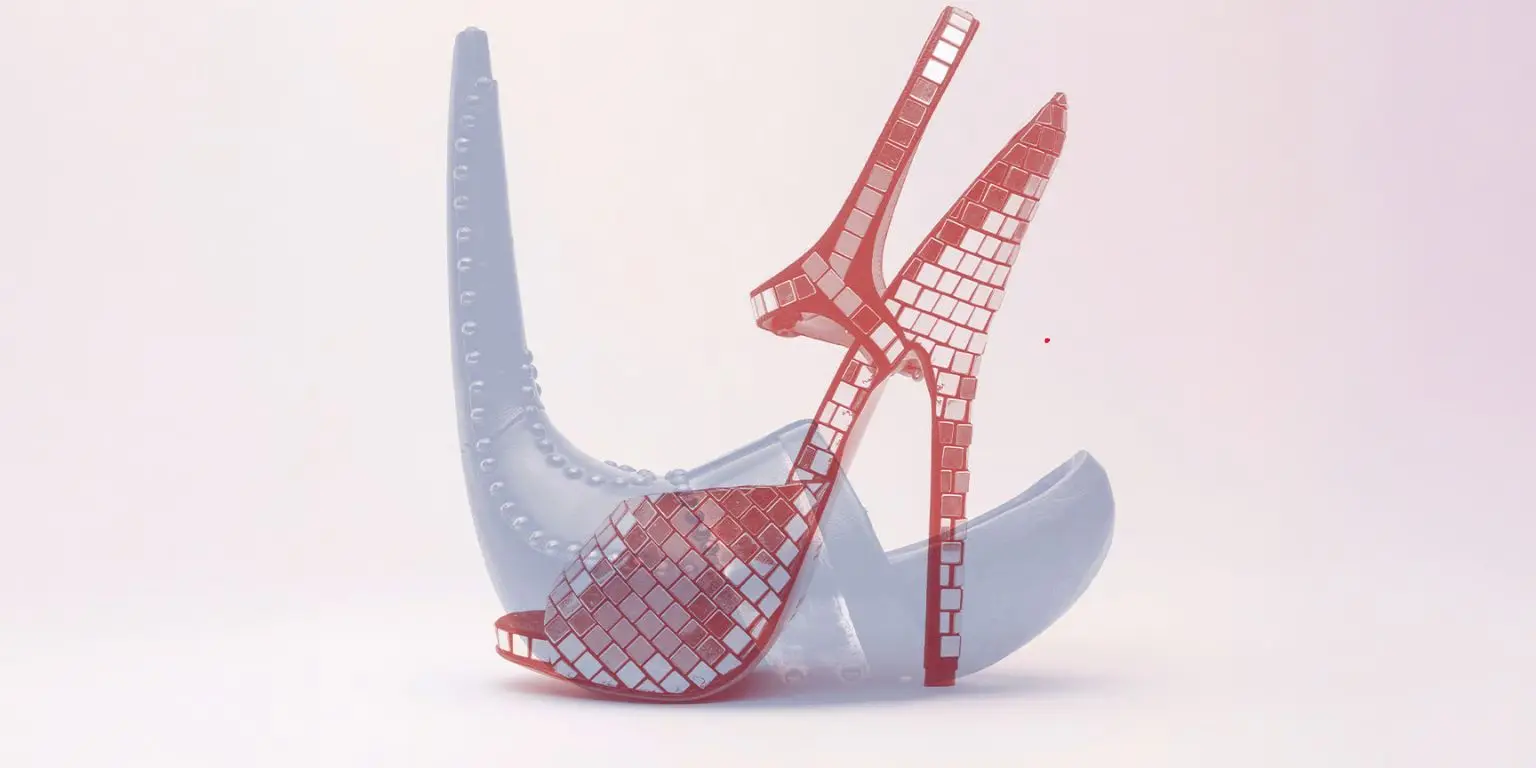
Under the historic Coupole Wybo at Printemps Haussmann, more than 200 shoes now map the strange relationship between the foot and everything fashion asks it to become. A heel disappears entirely on a Jean Paul Gaultier boot. Vivienne Westwood stretches the platform into impossible height. Ballet slippers carry the marks of performance, while contemporary designs push proportion, transparency, ornament, and construction in completely different directions. Pas à Pas, on view through October 28, turns the shoe into far more than an accessory.
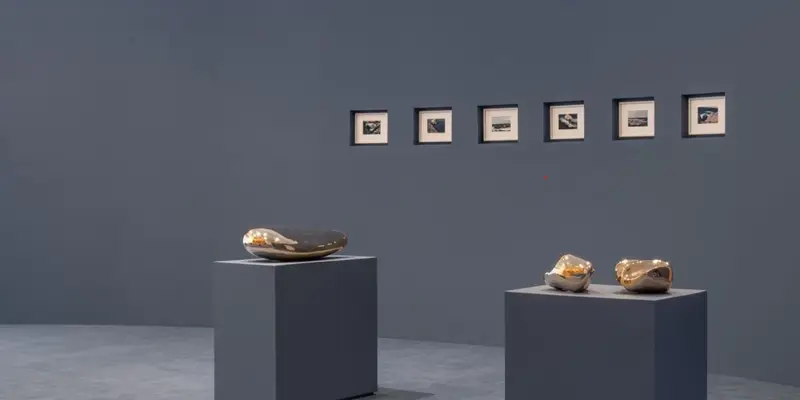
Pas à Pas exhibition unfolds across 11 sections, bringing together museum loans, luxury-house creations, private collections, Printemps archives, and work by ESMOD students.
The exhibition is organized through ideas including performance, ornament, fetish, transparency, form, and imprint, allowing historical pieces to sit beside contemporary experiments and exposing how dramatically footwear can reshape both the body and the silhouette.
Fashion at Its Feet
Move through Pas à Pas and the shoe keeps changing its role. Jean Paul Gaultier’s heel-less ankle boot from SS2012 strips away the heel and shifts the balance of the entire silhouette. Vivienne Westwood’s Super Elevated Gillie from FW1993/94 pushes the platform to an almost architectural height. Nearby, pointe shoes worn by étoile dancer Aurélie Dupont pull the exhibition into performance, where footwear is shaped by precision, pressure, and the physical discipline of ballet.
That dialogue continues through the exhibition’s Figuration section, where the shoe becomes an image in its own right. An ELLE cover photographed by Lionel Kazan in 1953, featuring pale-blue satin pumps designed by Roger Vivier for Christian Dior-Delman, captures the moment footwear began to command the frame rather than simply complete the silhouette.
Across Pas à Pas, construction, performance, and image keep intersecting. Pointed toes lengthen the foot, transparent materials reveal what is normally concealed, sculpted soles alter posture, and ornament begins to compete with function. Placed beside one another, the pieces show how designers have used footwear to shape not only the body, but the way fashion itself is seen.