At The Shed in New York, Thom Browne planted a giant chrysalis in the middle of the runway and let the collection grow around it. Caterpillars circled the set before butterflies, bees, dragonflies, and beetles began appearing across the collection and its fantastical shoes. Thom Browne Spring 2027 takes his fascination with transformation literally, turning the final show of New York Fashion Week into a garden caught somewhere between discipline and fantasy.
The collection draws on Disney’s A Bug’s Life, yet Browne filters the childhood story through his own exacting vocabulary. Checks stay precise. Shoulders remain controlled. Pleats hold their geometry. Meanwhile, insects crawl across the tailoring, wings stretch over looks, and textures begin to resemble grass, flowers, and beetle shells. The result is playful without losing the rigor that keeps Thom Browne unmistakably Thom Browne.
A Garden Cut Through Thom Browne’s Signature Tailoring
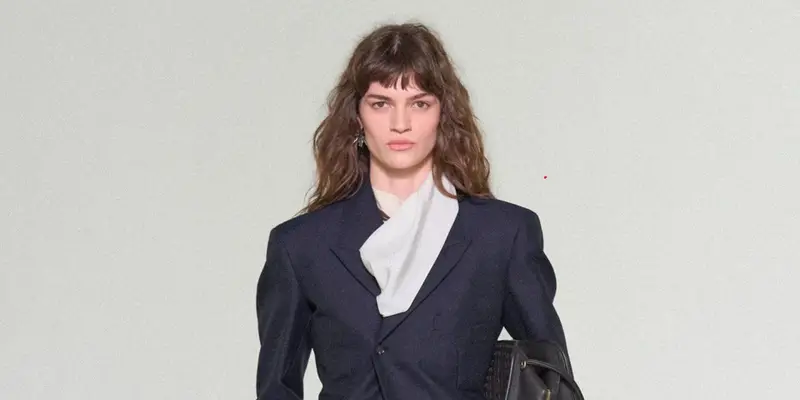
Browne keeps the collection rooted in the sharp tailoring that has become his signature, yet Spring 2027 lets the garden slowly break through it. Airy madras plaids, grid-check piqué, checked cashmere, and tweed establish the familiar structure first. Then the surface begins to shift. Jacquard grasshoppers disappear beneath embroidered grass, bees settle across Chesterfield coats, and moths scatter over pleated skirts, while ants appear in gold bullion thread and red-and-black intarsia.
As the garden spreads, the textures become more elaborate. Organza, grosgrain, raffia, faux fur, and exaggerated pouf yarns turn tweeds into patches of grass and flower beds, while pleats sharpen the movement and asymmetrical embellishment interrupts Browne’s usual precision. Still, the tailoring keeps everything in check. Structured shoulders, narrow waists, and controlled proportions hold the fantasy together as insects, foliage, and texture keep pushing against them.
When Insects Reshape the Silhouette
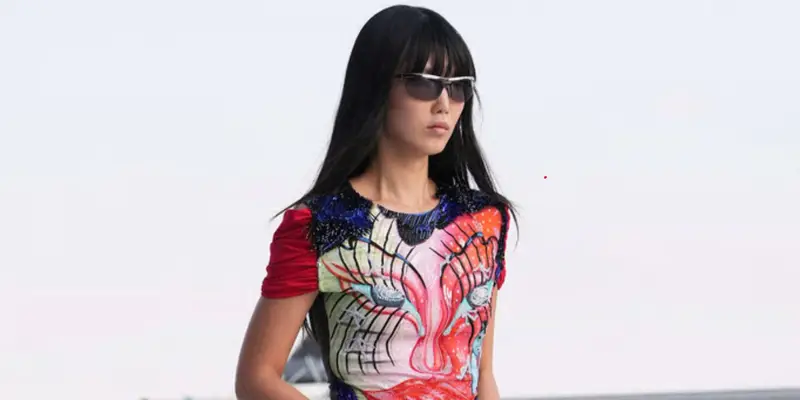
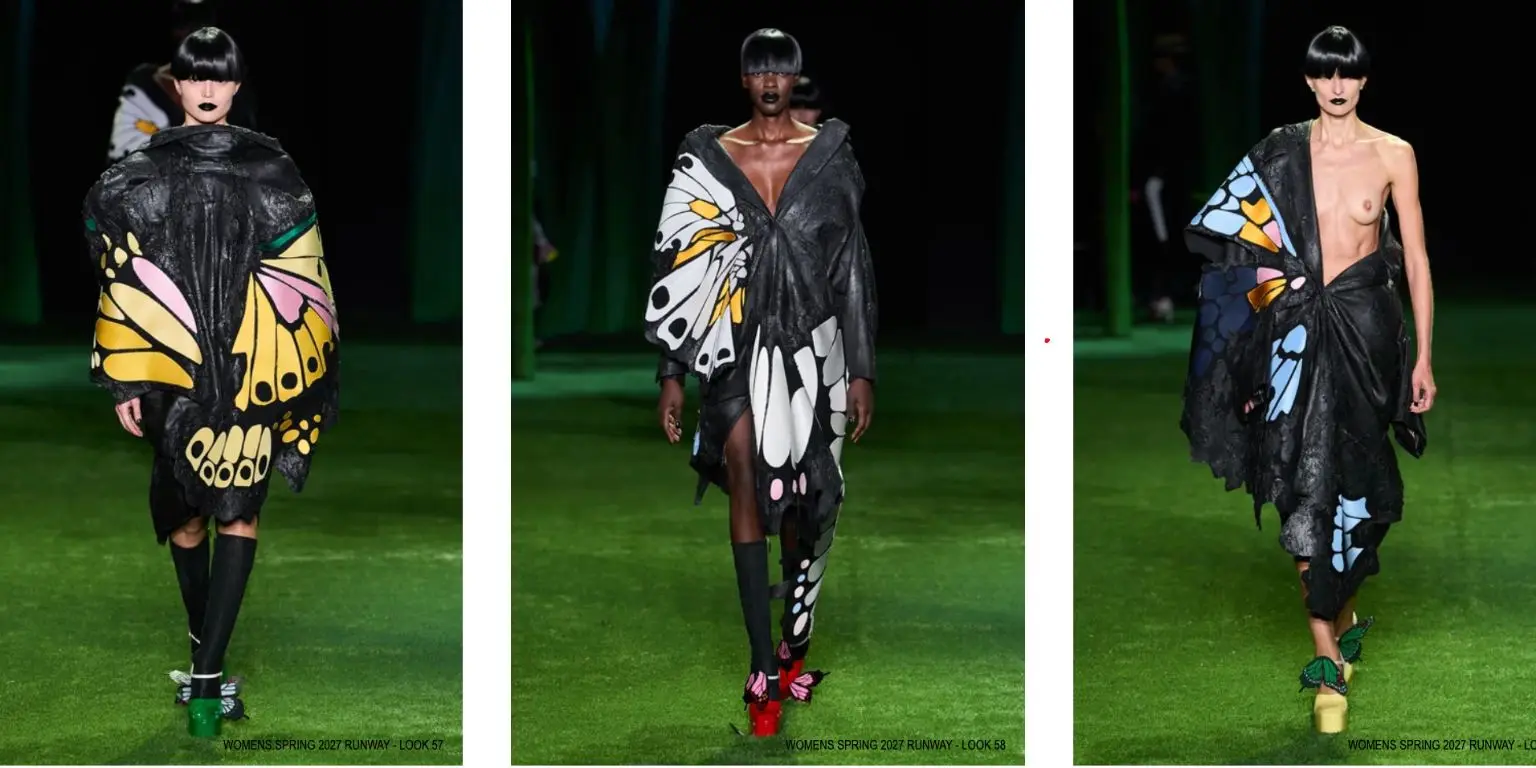
Once the motifs move beyond embroidery, Browne begins translating insect anatomy directly into the clothes. Ladybug markings stretch across rounded skirts, beetle references harden the surface, and butterfly wings extend over jackets and sculpted looks. Elsewhere, dragonfly jacquards create mosaic-like patterns, while geometric folds echo the segmented body of a caterpillar.
The silhouettes grow more dramatic with them. Corseted tops narrow the torso before skirts expand into architectural volume, while fitted bodices borrow from shells, wings, and exoskeletons. Yet the references never become literal costumes. Instead, Browne pulls fragments from the natural world and recasts them through tailoring, embroidery, proportion, and structure.
One of the strongest looks pushes that transformation further, with hundreds of folded elements covering a fitted top and floor-length skirt before a red black-widow marking cuts through the surface. The effect feels graphic, strange, and slightly sinister, which gives the collection a welcome darker edge.
The Metamorphosis Reaches the Shoes
The insect world eventually travels all the way down to the shoes. Pumps sprout wings, antennae, and sculptural extensions, carrying the metamorphosis beyond the clothes and into every part of the look. By that point, the exaggeration feels completely natural within Browne’s strange little ecosystem.
Beauty follows the same direction. Sleek bowl-cut wigs resemble polished beetle shells, while graphic makeup and saturated color push the models further into character. Nothing feels added for effect. Instead, each element continues the same transformation already happening across the clothes.