Every two years, Venice does what it does best: it becomes the center of everything. The Venice Biennale Arte 2026 marks the 61st edition of the oldest and most consequential international art exhibition on the planet, a gathering that has shaped the conversation around contemporary art since 1895. Heads of state, collectors, museum directors, artists, and the merely art-obsessed all descend on the Giardini, the Arsenale, and the labyrinthine calli of Venice for what remains the only event where national identity and artistic vision collide at scale. Nothing else comes close. This year, the stakes are different. And everyone in the room knows it.
A Vision Carried Forward
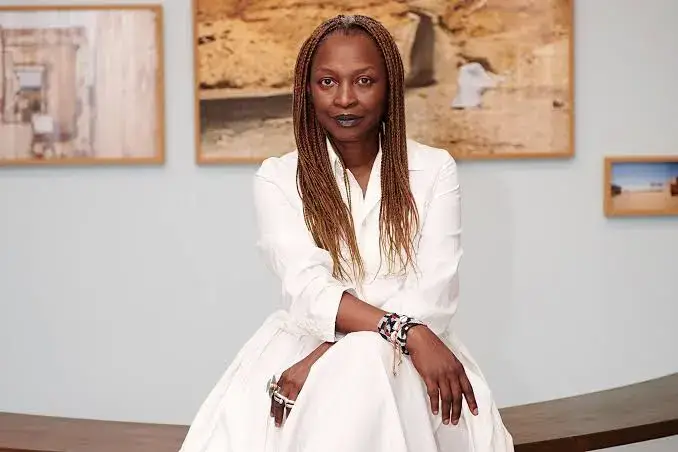
In Minor Keys, the exhibition conceived by Koyo Kouoh for the 61st International Art Exhibition of La Biennale di Venezia, arrives carrying the full weight of her absence and the full force of her vision. Kouoh, who was nominated Artistic Director of the Visual Arts Department in November 2024, passed away prematurely in May 2025. With the support of her family, La Biennale di Venezia made the decision to carry her exhibition into the world exactly as she conceived it: every artist selected, every spatial decision made, every conceptual thread woven under her direction. Her team, assembled across London, Dakar, Berlin, Beirut, Marseille, Cape Town, and New York City, completed what she set in motion. The Exhibition had already found its form. As her team described it, during a defining week in Dakar in April 2025: "We could hear the music she so gracefully composed with us." That music is what fills the Giardini and the Arsenale this May.
What In Minor Keys Actually Means
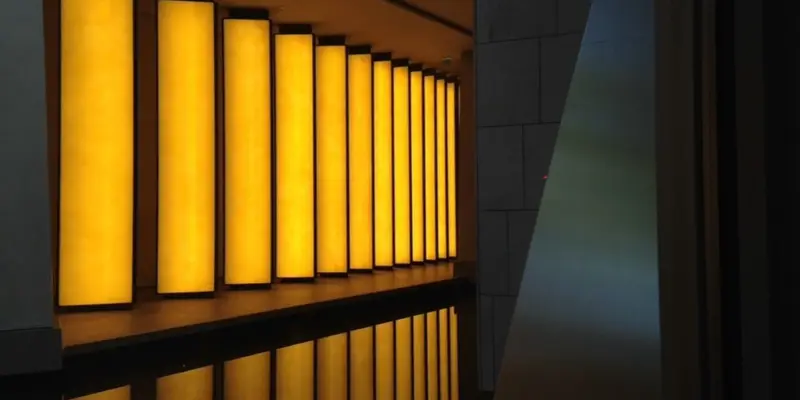
The title is not metaphor for its own sake. Kouoh built this Exhibition around a set of motifs, not sections: shrines, processions, schools, rest, enchantment. Think less white-cube taxonomy and more a score performed across multiple sites. The Exhibition resists the encyclopedic impulse that has defined so many Biennale editions before it. Instead, it asks you to slow down, to listen, to let themselves be changed by what they encounter. Multisensory installations create oases throughout the venues. Indigo banners designed by Cape Town-based Wolff Architects sweep from rafters to floors at every threshold, marking the passage from one constellation of practices to the next. The design draws on komorebi, the Japanese concept of light filtering through leaves, and it shows.
111 invited participants, among them individual artists, collaborative duos, collectives, and artist-led organizations, represent geographies spanning Salvador, Dakar, San Juan, Beirut, Paris, and Nashville. Kouoh selected them for resonance and affinity, not geography alone. The connections she drew between practices separated by continents are among the Exhibition's most quietly radical moves.
The Numbers That Define This Edition
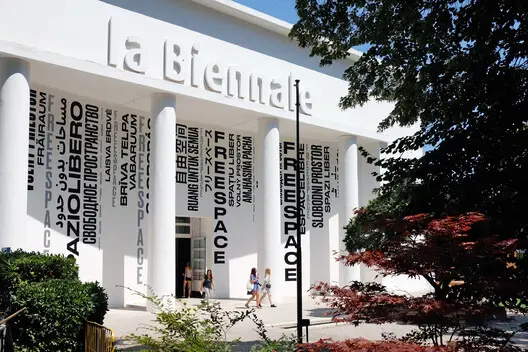
99 National Participations. 31 Collateral Events. Seven countries at Biennale Arte for the first time: the Republic of Guinea, the Republic of Equatorial Guinea, the Republic of Nauru, Qatar, the Republic of Sierra Leone, the Federal Republic of Somalia, and the Socialist Republic of Viet Nam. El Salvador participates for the first time with its own dedicated pavilion. La Biennale di Venezia maintains its position as a space of unconditional openness, rejecting any form of exclusion or censorship of art and culture.
The official sponsors reflect the weight of this edition. Bulgari serves as Partner of the 61st International Art Exhibition. illycaffè is Main Sponsor. American Express, Bloomberg Philanthropies, Vela-Venezia Unica, and Quattro Gatti Gin sponsor alongside.
The Pavilions Worth Your Time
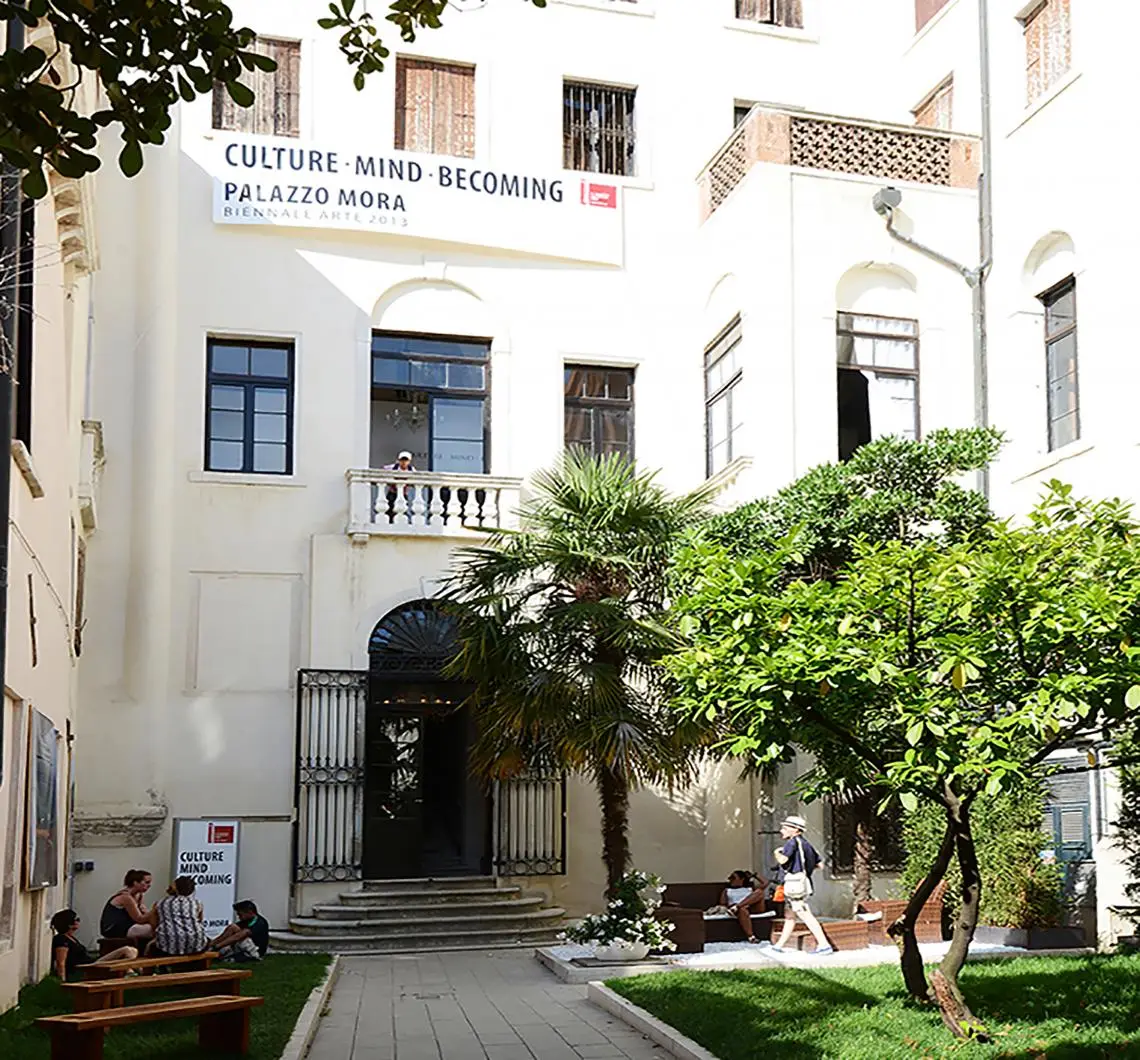
99 national pavilions spread across the Giardini, the Arsenale, and the calli of Venice means choices must be made. Here is where to go, in order of priority.
The Giardini: The permanent pavilions at the Giardini are where the VIP preview week plays out. These are the rooms that will define the conversation at every dinner between May 6 and 8.
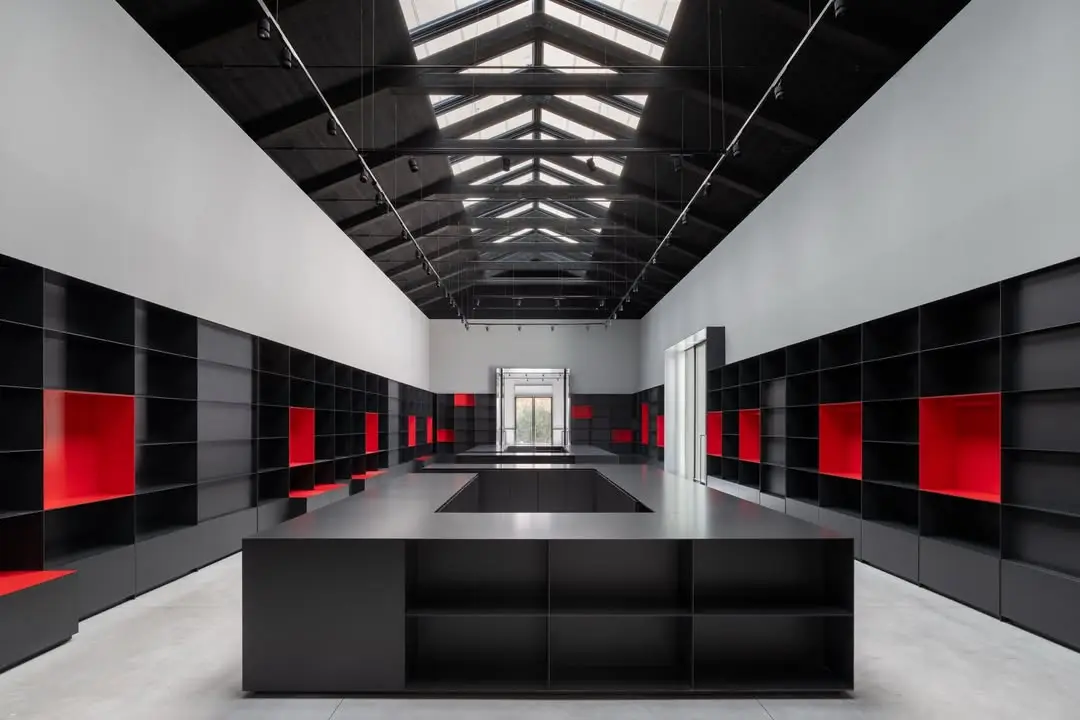
Giardini, the Central Pavilion after Complete Renovation The French Pavilion: Curated by Myriam Ben Salah and presents Yto Barrada, the Tangier-born, Paris and New York-based artist whose practice moves between photography, film, and objects to examine colonial histories and the textures of everyday life in the Maghreb. Barrada is one of the most quietly urgent voices in contemporary art. This pavilion will draw serious collectors from the first hour of preview.
The British Pavilion: Brings Lubaina Himid, Turner Prize winner and Commander of the Order of the British Empire, whose monumental paintings have spent decades recovering the erased presence of Black figures from European history. Curated by Ese Onojeruo for the British Council, this is one of the Giardini's most anticipated rooms. Go early, and go more than once.
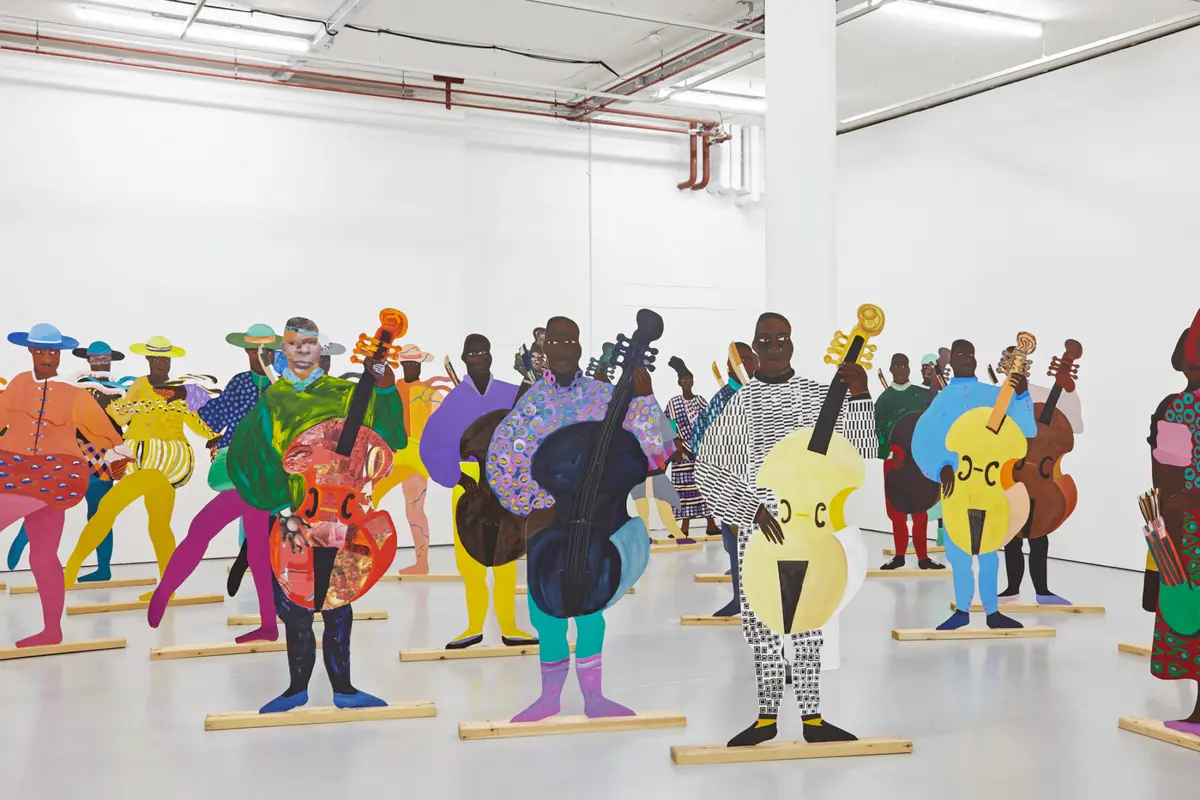
Lubaina Himid Solo Show In 2027 Jpg The German Pavilion: Carries its own weight this year, and not only for the work inside. Henrike Naumann, one of the two artists selected to represent Germany, passed away in February 2026 following a recent cancer diagnosis. Her project, shared with Sung Tieu and curated by Kathleen Reinhardt for the Institut für Auslandsbeziehungen, is conceptually complete and will be realized exactly as she specified. Naumann's installations used furniture and interior design to excavate political narratives.
The Brazilian Pavilion: Presents two artists who rarely share a room: Rosana Paulino and Adriana Varejão, curated by Diane Lima for the Fundação Bienal de São Paulo. Both practices reckon with the violence and endurance of Afro-Brazilian identity through radically different visual languages. Together, the tension is the point.
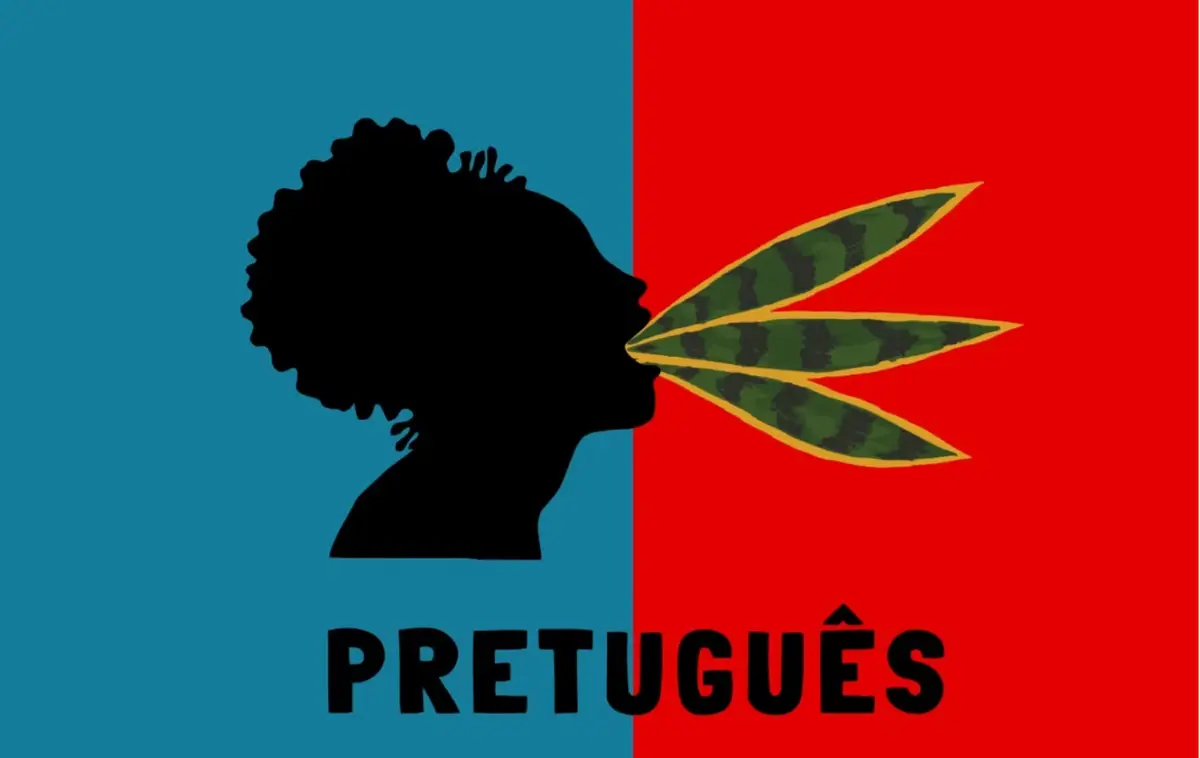
Flag Created For The Rio Art Museum (MAR) by Artist ARosana Paulino The Japanese Pavilion: Presents Ei Arakawa-Nash, organized by the Japan Foundation. Arakawa-Nash's performance-rooted practice blurs the line between object, event, and collective participation. Among the Giardini's more formally adventurous offerings this year.
The Qatar Pavilion: Makes its debut in the Giardini and arrives with a lineup that reads like a collector's shortlist. Rirkrit Tiravanija, Sophia Al-Maria, Tarek Atoui, Alia Farid, and Fadi Kattan, organized under Al-Mayassa bint Hamad bin Khalifa Al Thani. Five artists, five distinct geographies, one room. This will be one of the most attended pavilions of the preview week.
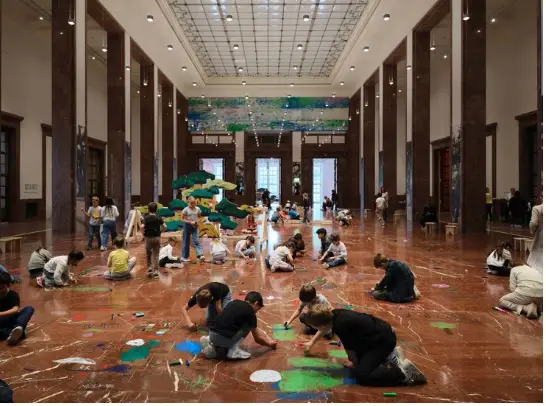
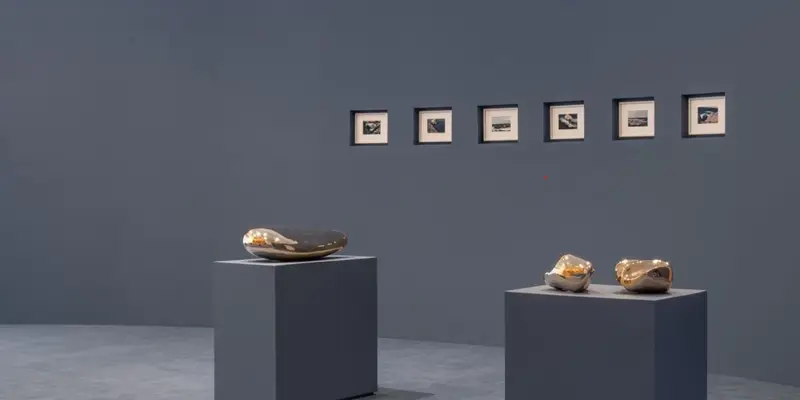
Ei Arakawa Nash- Mega Please Draw Freely, 2025 Haus Der Kunst, Munich The American Pavilion: Presents sculptor Alma Allen, organized by Jeffrey Uslip for the American Arts Conservancy. Allen's large-scale organic forms in bronze and stone occupy space with rare authority. Given the political noise that surrounded the US selection process this cycle, expect this pavilion to generate conversation well beyond the art itself.
The Spanish Pavilion: Presents Oriol Vilanova, curated by Carles Guerra. Vilanova's postcard-based archive practice unpacks the clichés of tourism and collective memory. Quietly subversive, consistently elegant.
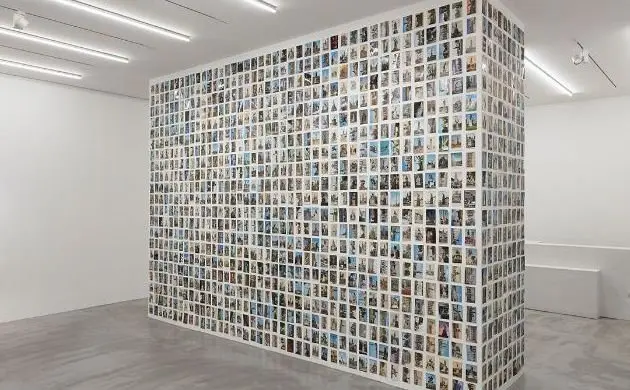
The Arsenale: The Long Walk Rewards
The Arsenale requires commitment. It also delivers some of the edition's most charged moments.
The Ukrainian Pavilion: Presents Zhanna Kadyrova, organized by Ksenia Malykh and Leonid Marushchak. At the center of the presentation is a dangling sculpture physically evacuated from a Russian frontline. Nothing in the Arsenale will hit quite the same register. This is not optional.
The Moroccan Pavilion: Presents Amina Agueznay, curated by Meriem Berrada. Agueznay works with craft traditions, textiles, and collective making in ways that feel entirely contemporary. A pavilion that rewards slowness.
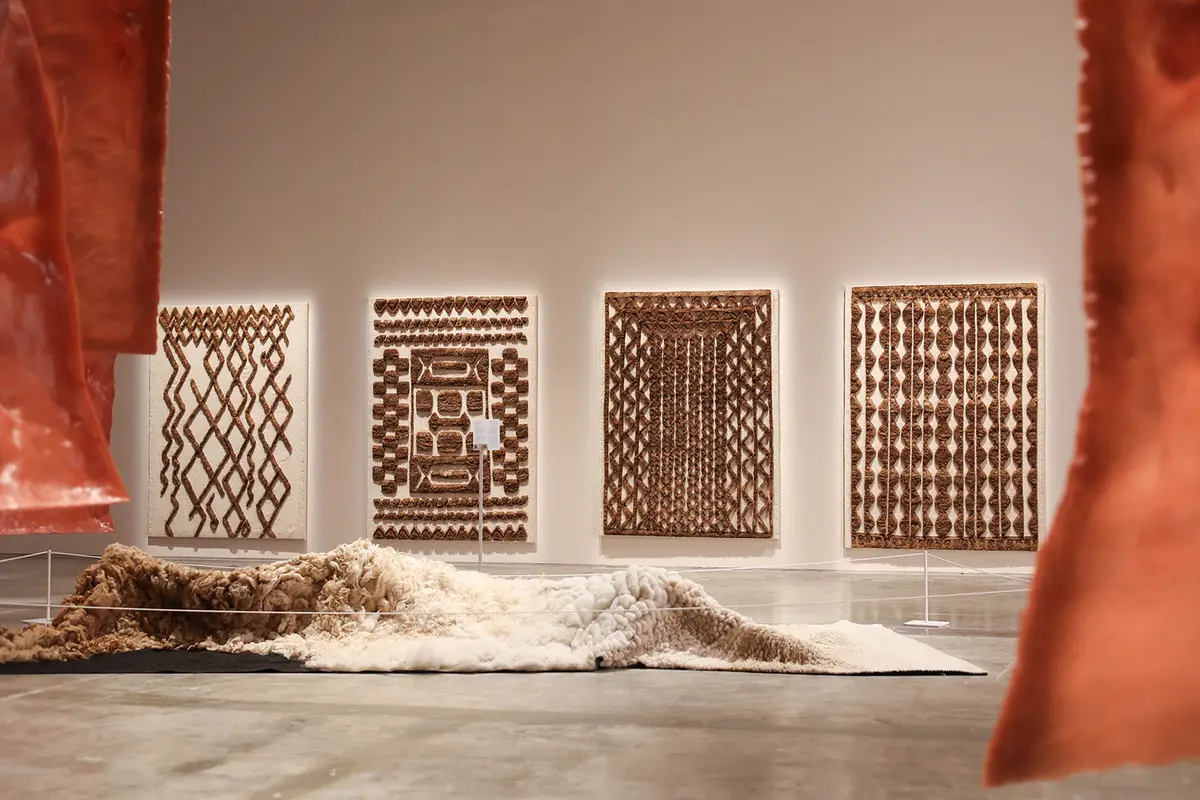
Amina Agueznay- Arab Design Now, Design Doha Biennial Qatar Museums, Doha (QATAR) 2024 The Uzbekistan Pavilion: Titled The Aural Sea, brings seven artists together around the environmental collapse of the Aral Sea basin, curated by the inaugural cohort of the Bukhara Biennial Curatorial School. The combination of ecological grief, mythmaking, and Central Asian visual language makes this one of the Arsenale's more unexpected and genuinely moving presentations.
The Somali Pavilion: Makes its debut with a team that includes poets Asmaa Jama and Warsan Shire alongside artist Ayan Farah, organized by Mohamed Mire and Fabio Scrivanti. At Palazzo Caboto in Castello. One of the most anticipated first appearances of this edition.
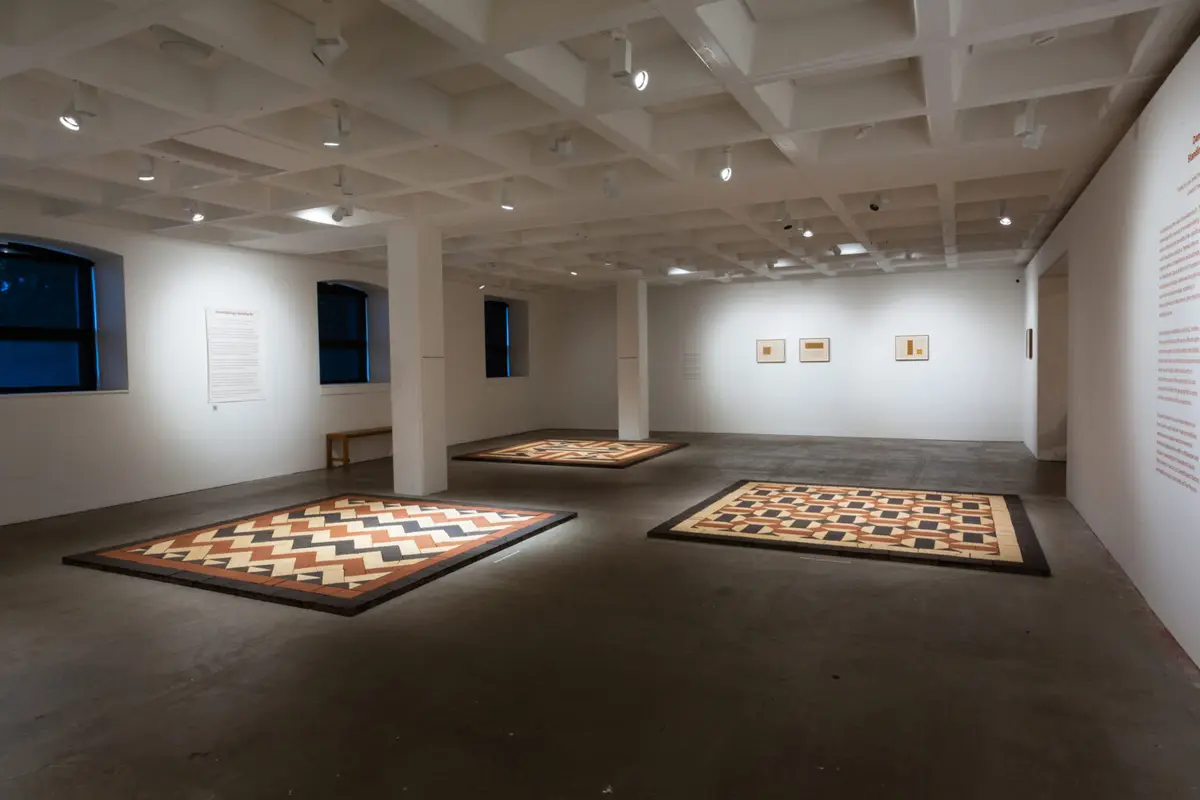
The Saudi Arabian Pavilion: Presents Dana Awartani, curated by Antonia Carver and Hafsa Alkhudairi for the Visual Arts Commission. Awartani's textile-based practice draws on Islamic geometric tradition and physical endurance as a form of devotion. One of the most visually distinctive presentations in the Arsenale.
The Italian Pavilion: Where Culture Meets Century-Long Commitment
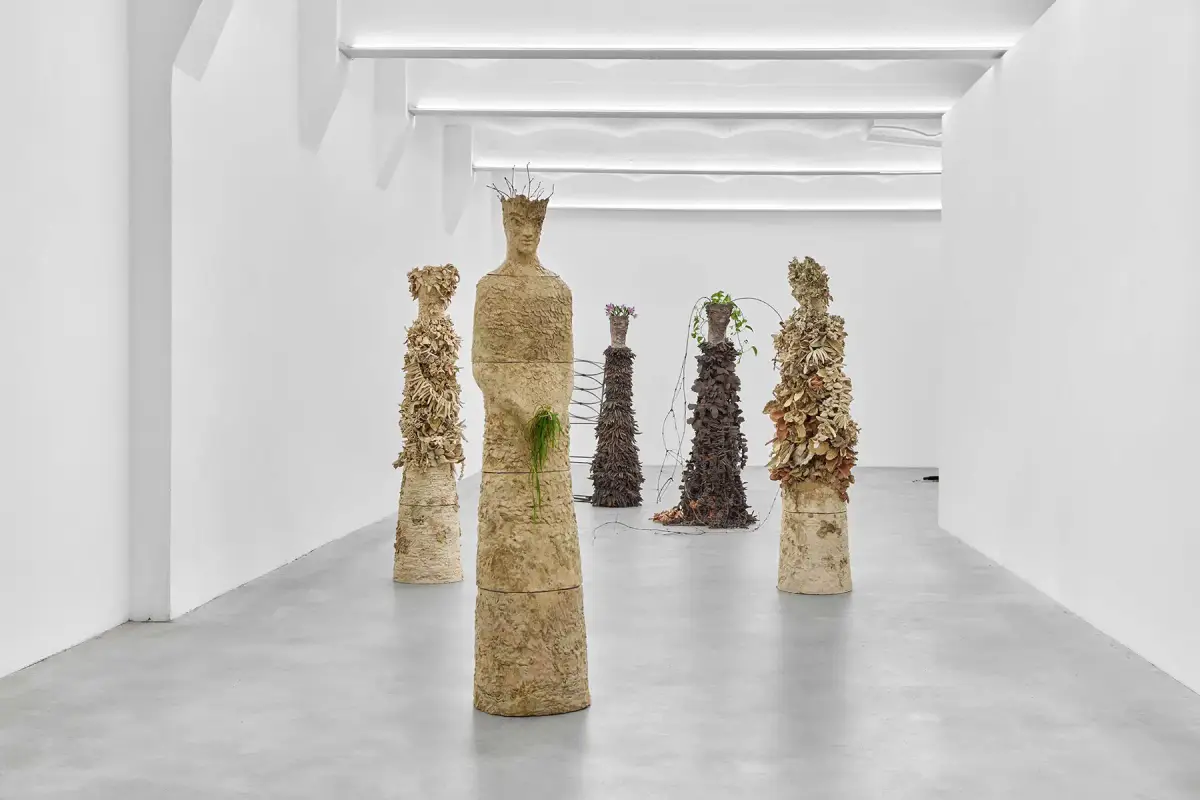
The Italian Pavilion is one of the most anticipated of this edition, and the partnership behind it is worth knowing. Zegna is sponsoring the Italian Pavilion at Biennale Arte 2026, a move that extends the luxury Maison's deepening commitment to contemporary art following its global multiyear partnership with Art Basel in 2025. The pavilion is curated by Cecilia Canziani and presents a new project by artist Chiara Camoni titled Con te con tutto, or With you with everything. The work invites a rethinking of how we exist in the world through sharing, dialogue between forms of life, and renewed attention to matter, time, and transformation.
In parallel, Oasi Zegna will host a solo exhibition by Chiara Camoni, curated by Ilaria Bonacossa, running May 22 through November 22. Located 90 minutes from Milan with views across the Alps from the Monviso to Monte Rosa, it extends the Biennale experience well beyond Venice for those who want to follow Camoni's practice into the landscape that partly shaped it.
The Bvlgari Pavilion
The Bvlgari Pavilion: As exclusive partner of the Biennale Arte through 2030, a commitment that marks a significant new chapter for the Roman maison. Bvlgari debuts its own pavilion at the Spazio Esedra within the Giardini. The commission goes to Canadian artist Lotus L. Kang, born in Toronto in 1985 and now based between New York and the international circuit, whose practice weaves together sculpture, photography and site-responsive installation using unstable, shifting materials. Photographic films that remain continuously sensitive to their environment, sedimentary sculptures that resist resolution, forms that exist perpetually in a state of in-between. The work created for Venice continues her engagement with time as non-linear and contingent, giving shape to questions of becoming, inheritance, impermanence and translation. It is an immersive environment rather than a discrete object, and it will reward slowness.
📍 Spazio Esedra, Giardini della Biennale 📅 9 May – 22 November 2026 🌐 bulgari.com
The Can't Be Missed Exhibitions
Fondazione Bvlgari at The Biblioteca Nazionale Marciana
Opening May 9th and running as an official Biennale Collateral Event, Fondazione Bvlgari makes its institutional debut in Venice with a site-specific exhibition hosted within the monumental Sale Monumentali of the Biblioteca Nazionale Marciana, one of the great repositories of Western knowledge, founded from the bequest of Cardinal Bessarione in 1468 and designed by Jacopo Sansovino.
Two artists, two spaces, two distinct meditations on memory and transmission. In the Salone Sansovino, Italian artist Lara Favaretto presents the seventh and final chapter of her ongoing work Momentary Monument — The Library, assembled in collaboration with university libraries, national institutes, academies and private collections: a cumulative monument to what is kept, what is lost, and what remains in perpetual suspension. In the Vestibule, Monia Ben Hamouda, winner of the fourth edition of the MAXXI Bvlgari Prize, presents Fragments of Fire Worship, a site-specific installation that enters into dialogue with the Library's layered architectural and cultural heritage.
Together, the two works reframe the Marciana as a living organism, subject to transformation, revision and forgetting. One of the quieter, more intellectually rigorous presentations of the Biennale season and entirely free to enter.
📍 Biblioteca Nazionale Marciana 📅 May 9 to November 22, 2026 🌐 Biblioteca Nazionale Marciana
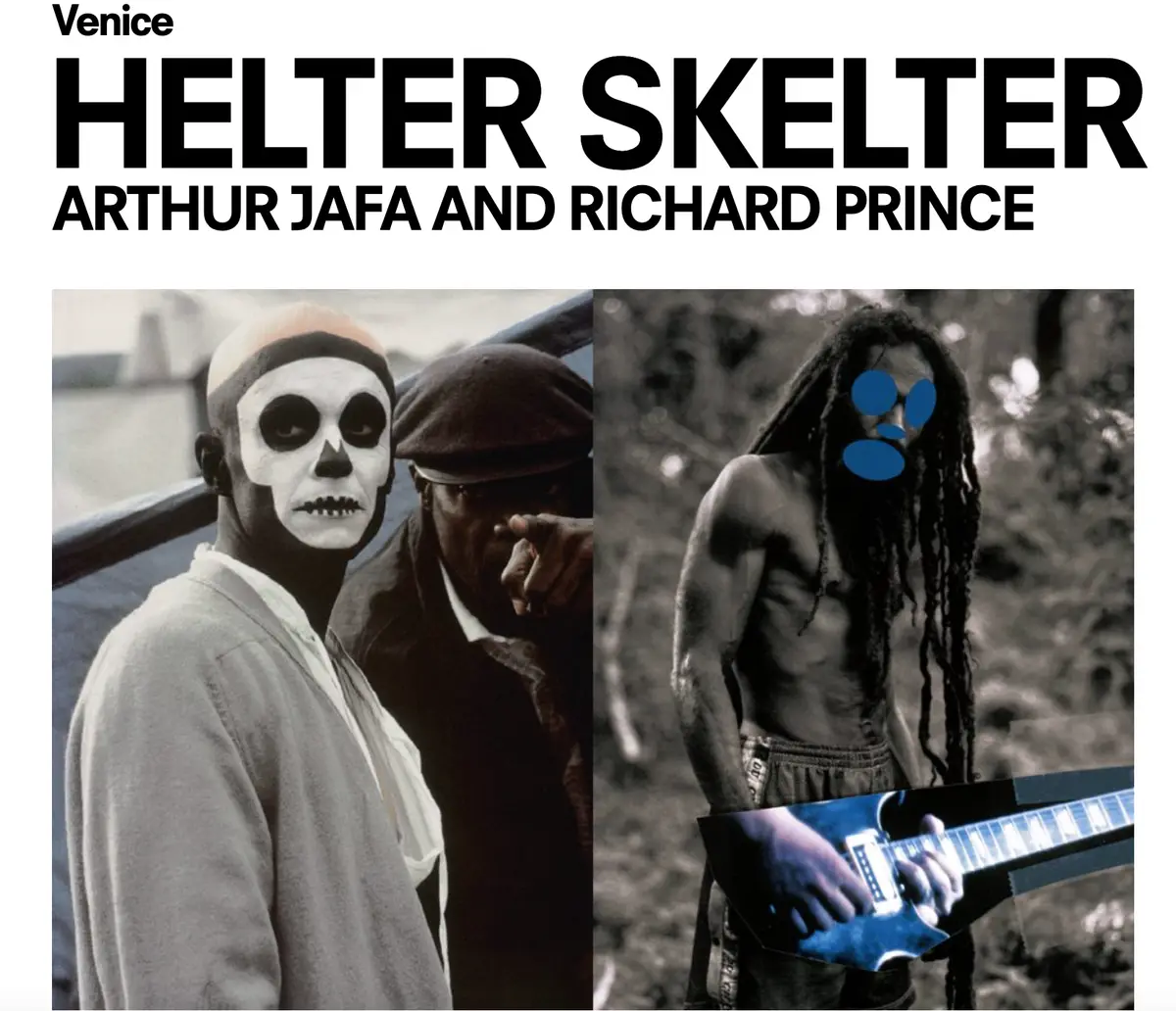
Fondazione Prada- Helter Skelter: Arthur Jafa and Richard Prince
The most intellectually charged exhibition of the Biennale season. Fondazione Prada brings together Arthur Jafa (b. 1960) and Richard Prince (b. 1949) for the first time, in a conversation that has never been examined in exhibition form before. Curated by Nancy Spector, former Artistic Director of the Guggenheim Museum, the show unfolds across the ground and first floor of Ca' Corner della Regina through thematic and conceptual juxtapositions.
Born a decade apart, both artists are image scavengers. They dip without permission into the overflowing reservoir of visual culture. Movies, pulp novels, social media, advertising, rock posters, celebrity memorabilia. and convert it into art by choice alone. What emerges is an unflinching exposé on America: its mythology, its violence, its racial history and its pop seductions.
Jafa's practice reflects his identity as an African American man and his mission to invigorate Black cinema. Prince hovers between a self-conscious critique of white masculinity and a fascination with the underbelly of the American psyche. Together, the tension is the point. Over fifty works span photographs, videos, installations, sculptures and paintings, alongside new commissions and a collaboratively conceived zine. The exhibition's title, borrowed from The Beatles, weaponized by Charles Manson, invoked in a 1992 MOCA show that excluded Black artists, arrives at Ca' Corner della Regina as an unruly readymade, selected by both artists to disrupt expectations.
📍 Fondazione Prada Venice 📅 May 9 to November 22, 2026 🌐 Fondazione Prada Venice
Marina Abramović: Transforming Energy
A landmark encounter between performance and the Renaissance
Marina Abramović becomes the first living woman artist to be honoured with a major solo exhibition at the Gallerie dell'Accademia, Venice's most revered repository of Renaissance painting. Timed to coincide with the 61st International Art Exhibition of La Biennale di Venezia and the artist's 80th birthday, Transforming Energy is a conversation across centuries.
Curated by Shai Baitel (Artistic Director, MAM Shanghai) in close collaboration with Abramović, the Exhibition breaks new ground within the institution itself, unfolding across both the permanent collection galleries and the temporary exhibition spaces, a first in the Accademia's history.
📍 Gallerie dell'Accademia 📅 May 6 to November 22, 2026 🌐 Gallerie dell'Accademia
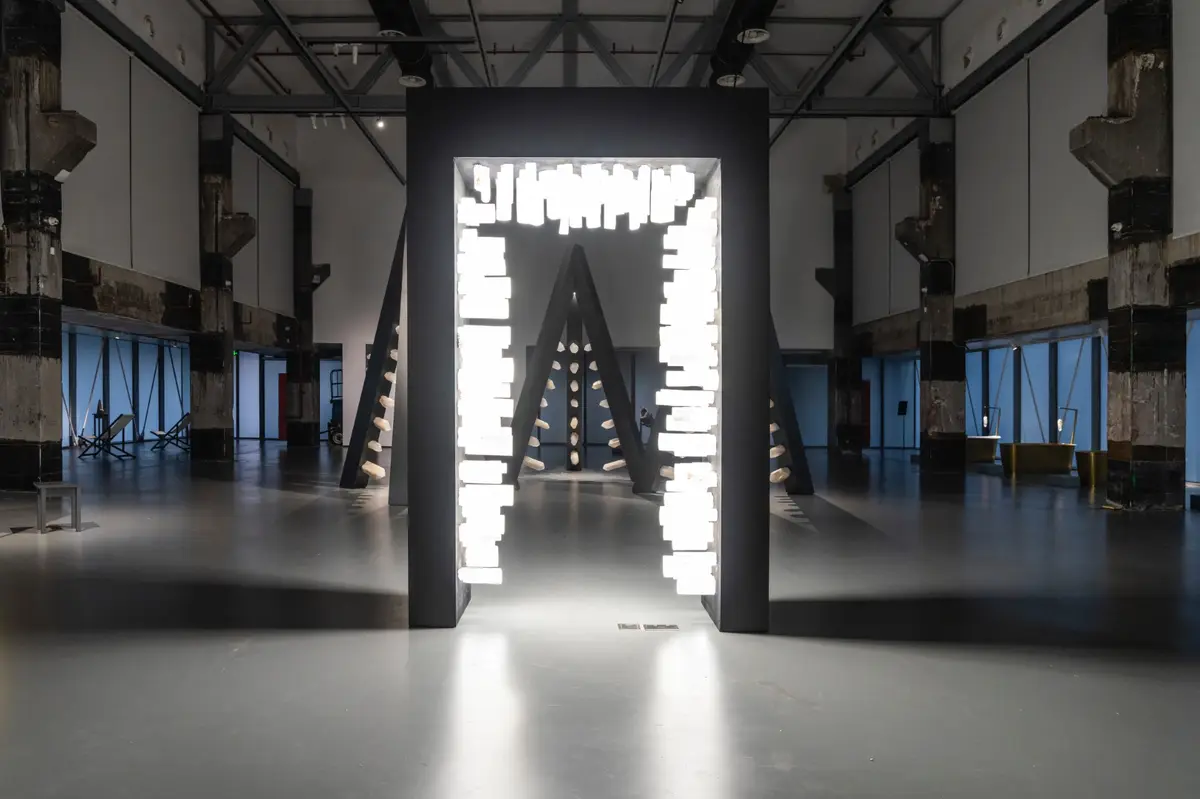
Bottega Veneta -If All Time Is Eternally Present
Bottega Veneta and Creative Director Louise Trotter extend the Maison's long-standing connection to Venice through one of the Biennale's most anticipated public interventions. In partnership with the Pier Luigi Nervi Foundation, curated by Venetians Marta Barina and Chiara Carrera, the Exhibition transforms Campo Manin into an open-air moving image event after dark. The facade of Palazzo Nervi Scattolin becomes a screen for video projections by Meriem Bennani and Orian Barki, Tai Shani and Kandis Williams. The historic piazza and its surrounding architecture anchor the work's connection to Venice and its inhabitants, making this a genuinely public, cross-cultural encounter. Screenings run nightly, free and open to all, with the city itself as the frame.
📍 Campo Manin 📅 May 6 to June 7, 2026 🌐 Pier Luigi Nervi Foundation
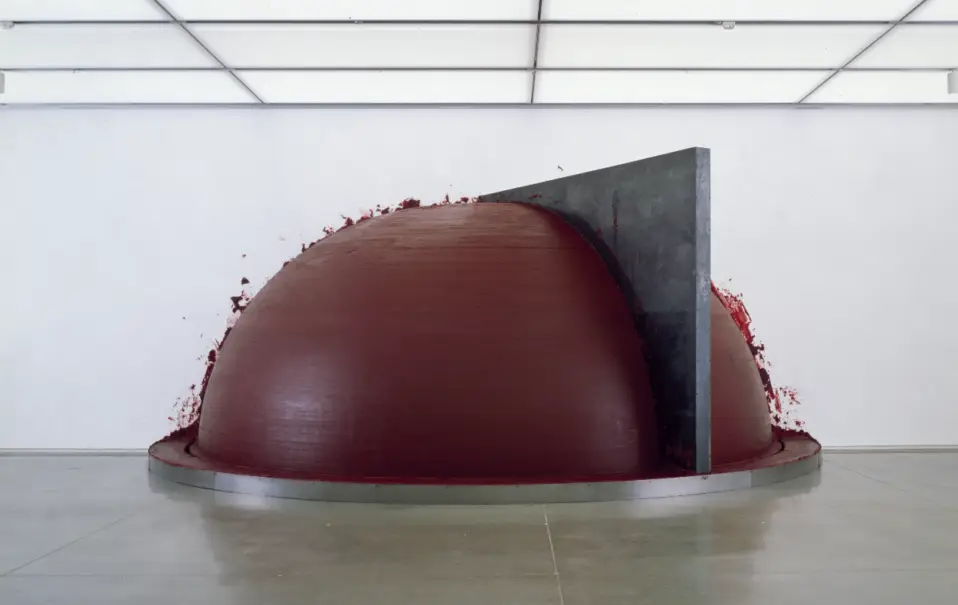
Anish Kapoor at Palazzo Manfrin
Anish Kapoor at Palazzo Manfrin in Cannaregio is the non-negotiable off-site stop of Biennale Arte 2026. Opening May 5, one day before the VIP preview, the Exhibition runs through August 9 and marks only the second time this 16th-century palazzo opens to the public. Large-scale installations spanning five decades sit alongside 50 to 70 architectural models and a new room-sized environment in silicone and paint. Kapoor told The Art Newspaper that he has long thought of his work as potential architecture. Palazzo Manfrin is where that idea becomes a place you can physically enter.
📍 Palazzo Manfrin 📅 May 6 to November 22, 2026 🌐 Anish Kapoor
Special Projects Worth the Detour
In Minor Keys: Forte Marghera
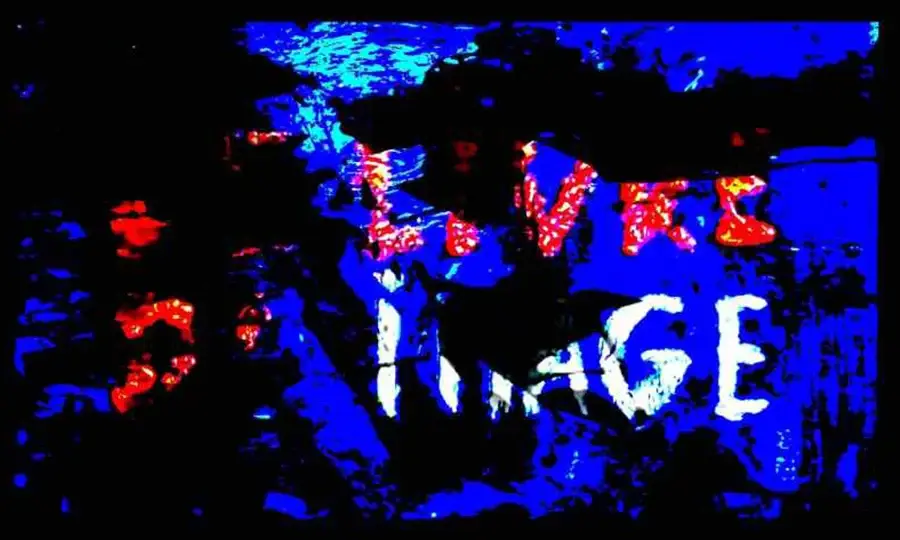
At Forte Marghera in Mestre, three artists extend In Minor Keys to the mainland: Temitayo Ogunbiyi's undulating lawn sculpture invites visitors to lie down and look up, Uriel Orlow maps La Biennale through the prism of plants, and Fabrice Aragno presents a radical three-dimensional reinterpretation of Jean-Luc Godard's The Image Book. Take the water taxi. Make an afternoon of it.
📍 Polveriera austriaca, Forte Marghera, Mestre 📅 9 May – 22 November 2026 🌐 labiennale.org/en/venues/forte-marghera-mestre
Also On: Around the Biennale
Serenissimersivo in Dorsoduro
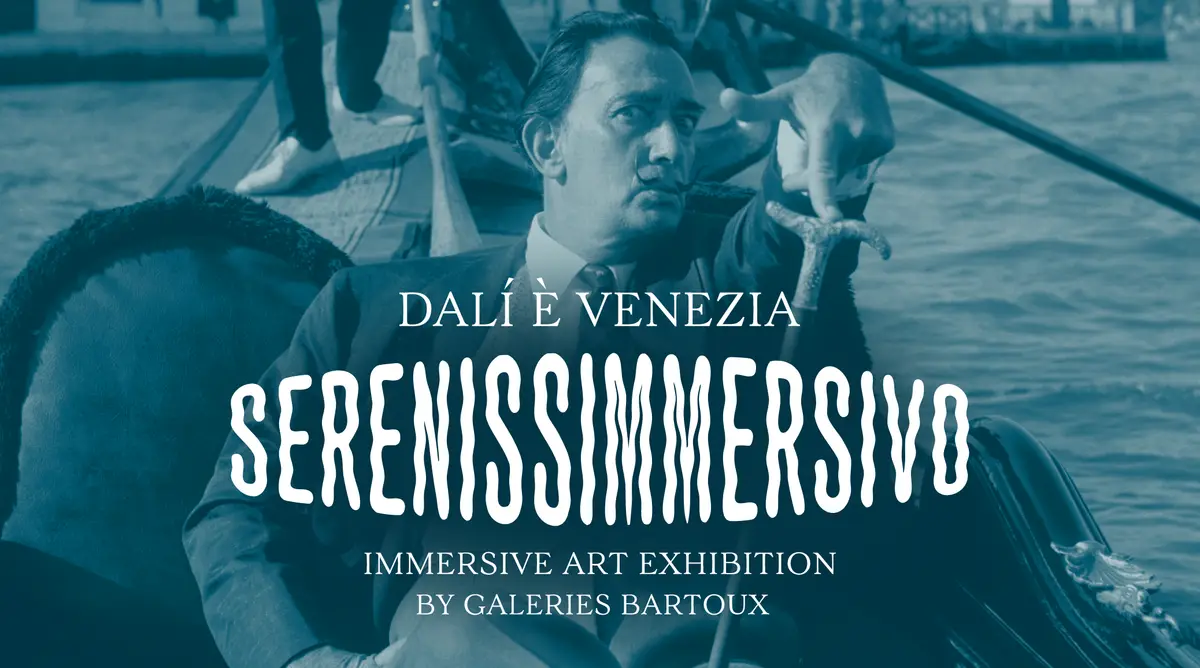
Running parallel to the Biennale through September 1, Galeries Bartoux Venice transforms Accademia Cinemersiva, a former cinema in Dorsoduro, into a 12-meter high immersive space where Salvador Dalí's sculptures come to life across seven dreamlike animated sequences. Created in partnership with French creative studio Superbien and in collaboration with Dalí Universe, Serenissimersivo sets the master's surrealist vocabulary loose in Venice's most iconic spaces. Steps from the Accademia Bridge and the Galleria dell'Accademia, the full experience spans 1,200 square meters and includes a gallery of paintings and sculptures alongside Le Café des Arts in a private garden. A natural stop on any afternoon between pavilions.
📍 Accademia Cinemersiva, Campo de la Carità 📅 11 February – 1 September 2026 🌐 Galeries-Bartoux
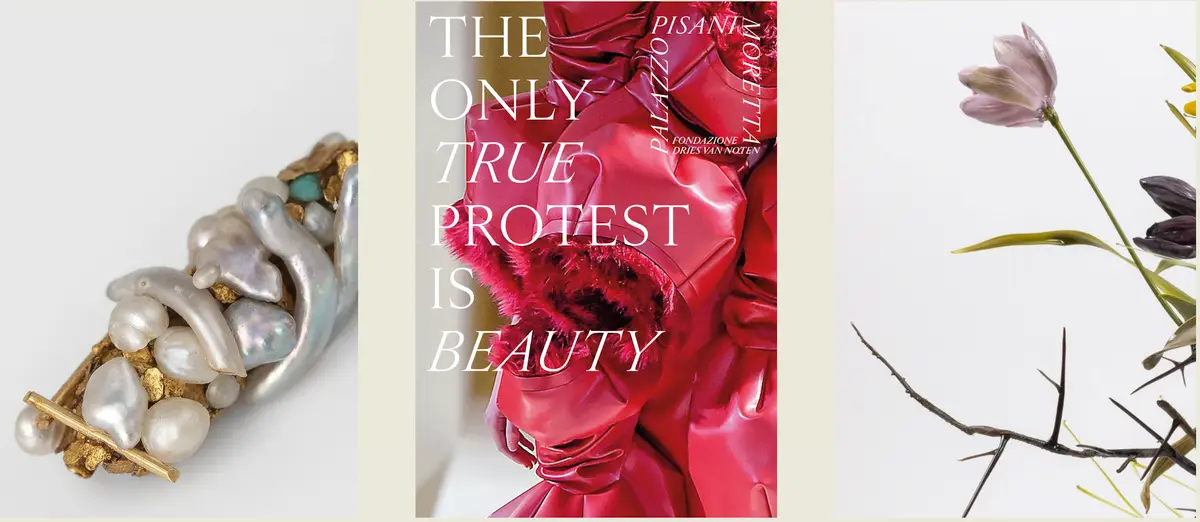
"The Only True Protest Is Beauty" at Palazzo Pisani Moretta
"The Only True Protest Is Beauty" at Palazzo Pisani Moretta Running parallel to Venice Biennale Arte from April 25 through October 4, Fondazione Dries Van Noten transforms Palazzo Pisani Moretta, one of the greatest private palaces on the Grand Canal, into a 20-room presentation where over 200 works across fashion, jewelry, art, ceramics and photography enter into conversation with five centuries of Venetian architecture. Curated by Designer Dries Van Noten with Curator Geert Bruloot, the presentation draws its title from a line by 1960s protest songwriter Phil Ochs and moves beyond disciplinary borders: fashion archive pieces face experimental ceramics, collectible design sits alongside contemporary textiles, and the Palazzo's frescoes and ornamental details become active participants in every room.
📍 Palazzo Pisani Moretta, Grand Canal, San Polo, Venice 📅 25 April – 4 October 2026 🌐 Fondazione Dries Van Noten
Pinault Collection
François Pinault's collection is one of the most consequential private holdings of contemporary art in the world. Over 10,000 works assembled across more than five decades, and in Venice, it has a permanent home across two of the city's most architecturally arresting spaces. Palazzo Grassi, the last great palazzo built on the Grand Canal, renovated by Tadao Ando and open to the public since 2006. Punta della Dogana, the former maritime customs point at the very tip where the Grand Canal meets the Giudecca Canal, transformed by Ando into one of the most dramatic exhibition spaces in Europe. Both are institutions in their own right, and during Biennale season they run programmes that rival anything happening in the Giardini.
For 2026, the Pinault Collection has done something it has never attempted before: four artists simultaneously occupying both venues, each with a major solo presentation. At Palazzo Grassi, Kenyan-British painter Michael Armitage presents The Promise of Change, a decade of paintings on lubugo bark cloth that weave together East African political history, literature and everyday life into images of remarkable density and beauty. Alongside him, Indian artist Amar Kanwar presents Co-travellers, two large multimedia installations that combine film, text and archival material into a meditative inquiry into power, violence and resistance. At Punta della Dogana, American artist Lorna Simpson presents Third Person, her most significant European exhibition in more than a decade, organized in partnership with the Metropolitan Museum of Art in New York, gathering around fifty paintings, collages, sculptures and films that trace more than twenty years of her exploration of memory, representation and the instability of narrative. In the same building, Brazilian artist Paulo Nazareth presents Algebra, a project rooted in performance walks across the Americas, the Caribbean and Africa that expose the unresolved fractures of colonial history. The title draws on the Arabic etymology of al-jabr — to recompose what has been broken.
A rich programme of concerts, performances, talks and screenings accompanies the four exhibitions, with particular intensity during the opening week of the Biennale in May and again during the Venice International Film Festival in late summer.
📍 Palazzo Grassi, Campo San Samuele 3231 📍 Punta della Dogana, Dorsoduro 2 📅 29 March 2026 – 22 November 2026 🌐 pinaultcollection.com
VIP Viewing & Tickets
The VIP preview days for the 61st International Art Exhibition are May 6, 7, and 8, 2026. Three days before Venice opens its doors to the world, and when every party worth attending happens. The VIP program covers unlimited entry across the full season from May 9 through November 22. Four invitations to the preview days for the Card holder and three guests. A private guided tour of In Minor Keys through the Corderie Arsenale and the Central Pavilion at the Giardini, for the holder and one guest, with groups of no more than 20 people.
On July 18, La Biennale di Venezia hosts its private party at Ca' Giustinian for the Festa del Redentore. The most spectacular fireworks in Italy, over the water, from the terrace.
Throughout the season, the program also includes discounts on performances across the Dance, Music, and Theatre Departments, reduced-price screenings at the 83rd Venice International Film Festival, and 10% off at the Biennale Bookshops.
For VIP access: ✉️ concierge@babble-up.com