In 1947, Christian Dior changed the shape of fashion with a single look. The Corolle skirt, full and fluid, built around the body like a flower in bloom, became the gesture that defined an era. Nearly eighty years later, Dior Maison and French designer Noé Duchaufour-Lawrance asked a question worth sitting with: what happens when that gesture is translated into light?
The answer took shape inside Palazzo Landriani, a 16th century palace at Via Borgonuovo 25 in Milan, exceptionally reopened for Milan Design Week 2026. The building, with its original structure intact, became the setting for an immersive installation built around the Corolle lamp collection, the latest chapter in a creative dialogue between Dior Maison and Duchaufour-Lawrance that began in 2019. A conversation, now seven years old, about what it means to carry heritage forward without freezing it in place.
Duchaufour-Lawrance Turns Couture Into Light
The Corolle lamps begin where Christian Dior always began: with fabric. Fabric as something alive, capable of movement, volume, and emotion. Noé Duchaufour-Lawrance takes that understanding and moves it into glass, crafted in Italy according to the Murano glassblowing tradition. From there, the gesture of draping becomes luminous. Folds and transparencies emerge from the hand-blown glass, catching and diffusing light the way silk does. Softly, deliberately, always with intention.
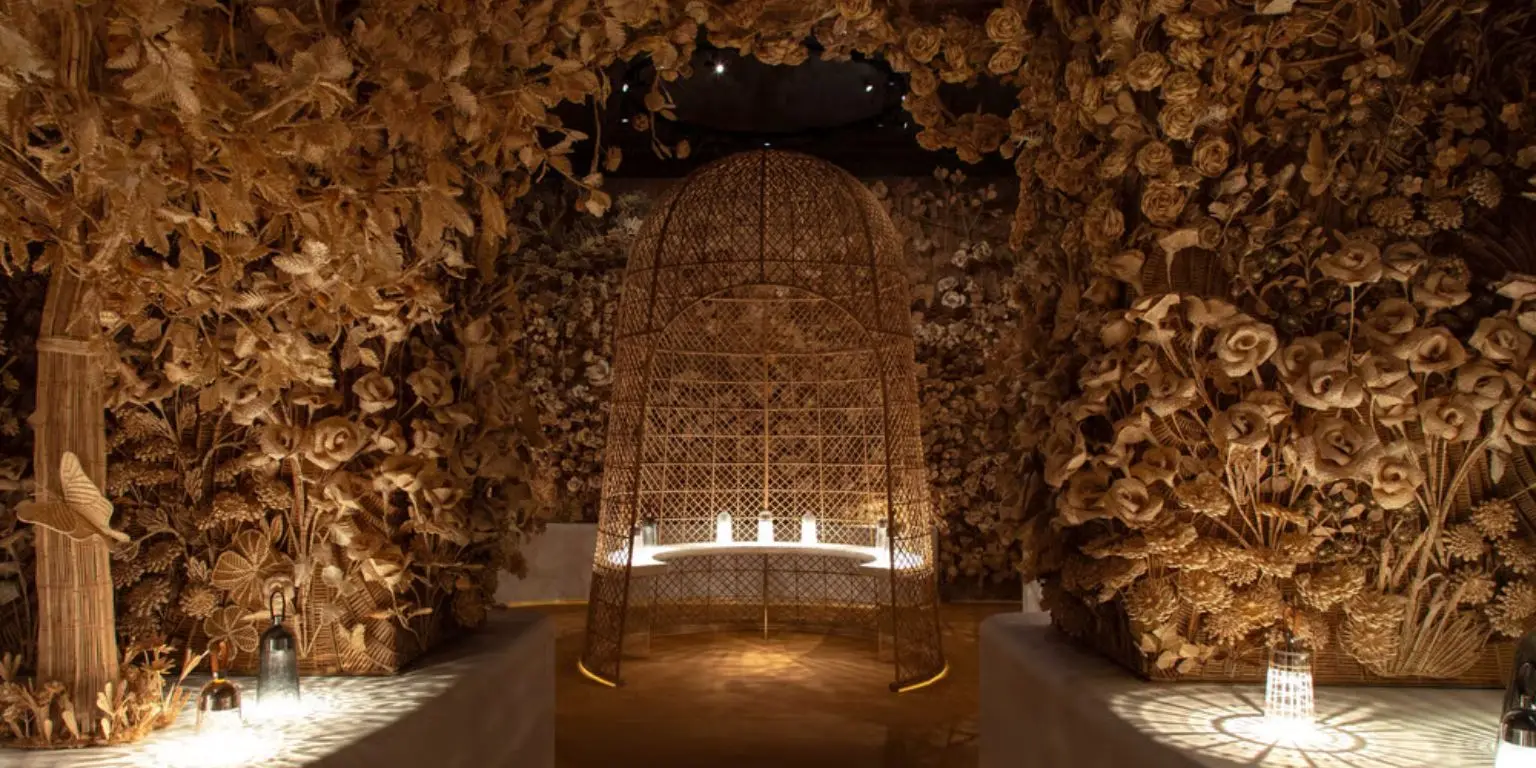
The collection then travels to Kyoto, where Japanese madake bamboo is handwoven by master craftsmen using traditional weaving techniques. Here, Dior's iconic cannage motif, the cane pattern that has appeared across the Maison's objects for decades, is reinterpreted through a natural and architectural structure. Japanese gesture meeting French decorative reference.
The result belongs to both traditions and to neither exclusively. It could only exist at the intersection of two cultures that share a profound respect for the handmade.
Most models are portable and rechargeable with a touch system. The larger versions serve as table lamps. Every piece carries a dual identity: a functional object and a sculptural presence.
Dior Brings Palazzo Landriani Back to Life
Palazzo Landriani had been waiting for the right moment to reopen. This Milan Design Week, Dior Maison gave it one. The 16th century palace on Via Borgonuovo 25, its original structure intact, became the setting for The Installation conceived by Duchaufour-Lawrance in collaboration with two Thai artists, who constructed a landscape of floral elements and scenographic surfaces that moved through the rooms of the palace like a second architecture.
The light arrived before anything else. Soft, calibrated, diffused through Corolle glass and madake bamboo in a way that made the historic walls feel inhabited rather than preserved. The floral elements built by the Thai artists rose around the lamps, framing them without competing, creating a suspended atmosphere where the boundaries between the handmade object and the handmade environment dissolved entirely.
The Exhibition unfolded as a sequence of rooms, and the story deepened with every step. The first room introduced the gesture. The next elaborated it. By the final space, the Corolle lamp had become something beyond a product: a luminous argument for what happens when couture heritage, Japanese craft, Murano tradition, and French decorative instinct are brought into the same room and allowed to speak to one another.