Long before Dior turned its flagships into destinations, there was 30 Avenue Montaigne. Christian Dior chose the Paris address in 1946 and, a year later, unveiled the collection that would define the Maison’s new silhouette and its place in fashion history. From the beginning, couture sat alongside salons, art, gardens, gastronomy, and the intimacy of being received at Dior.
Dior has since carried that formula into its most important cities. New York now stretches across four floors on Madison Avenue, only steps from where Christian Dior established his American subsidiary in 1948. Beverly Hills followed with Peter Marino architecture, a three-story garden, and Monsieur Dior by Dominique Crenn, Dior’s first restaurant outside Paris. Today, September 18, 2026, Milan takes its place in that story.
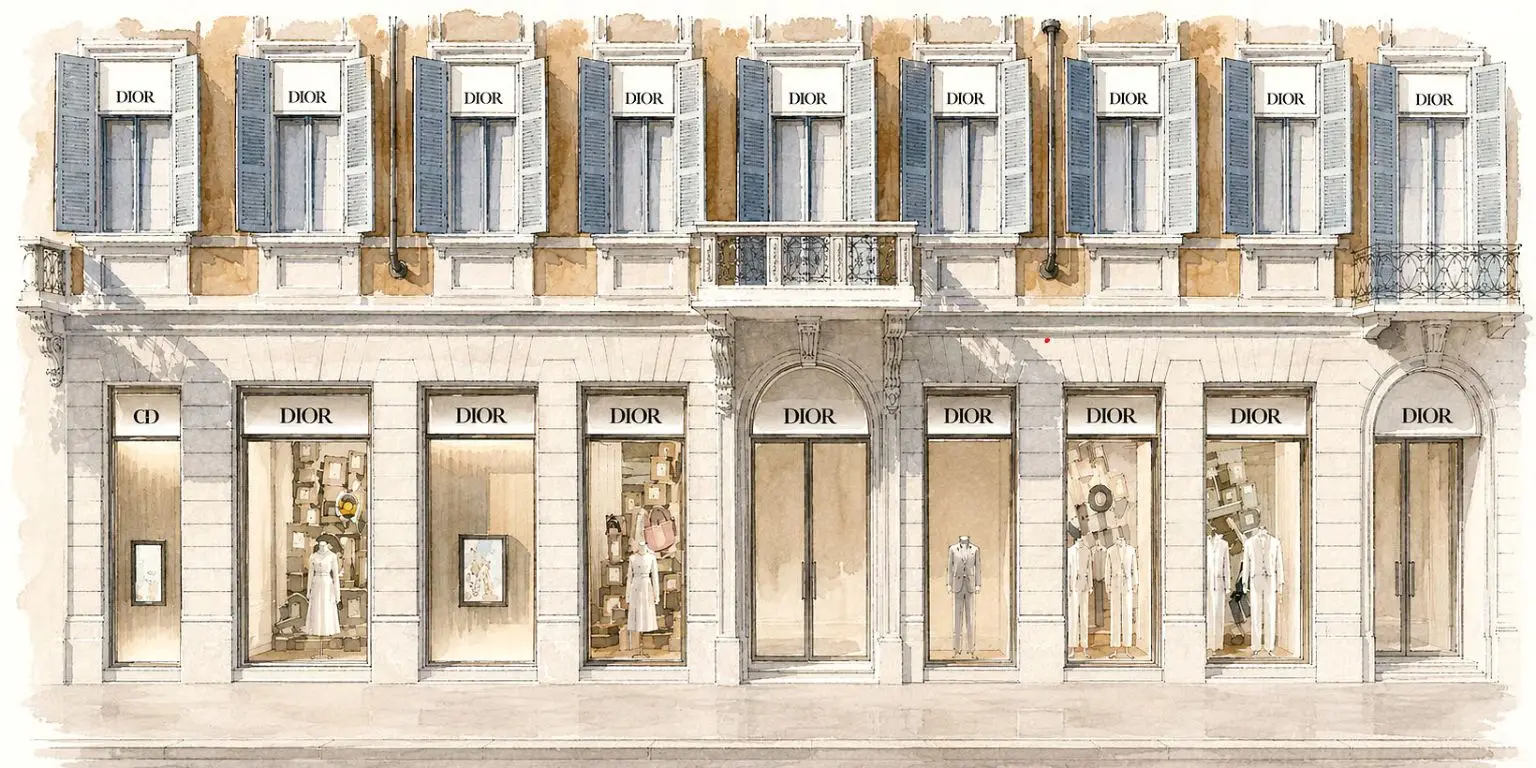
On Via Monte Napoleone, House of Dior Milan unfolds across three floors inside a historic building reworked by Peter Marino. Jonathan Anderson’s collections sit alongside fine jewelry, watches, perfume, Dior Maison, contemporary art, private salons, terraces, and courtyards. Downstairs, Enrico Bartolini, Italy’s most Michelin-starred chef, takes Dior out of the wardrobe and onto the table at Monsieur Dior, where houndstooth, Grand Soir, and the Maison’s visual codes are reworked through flavor, texture, and presentation.
Peter Marino Rewrites Dior Through Milan
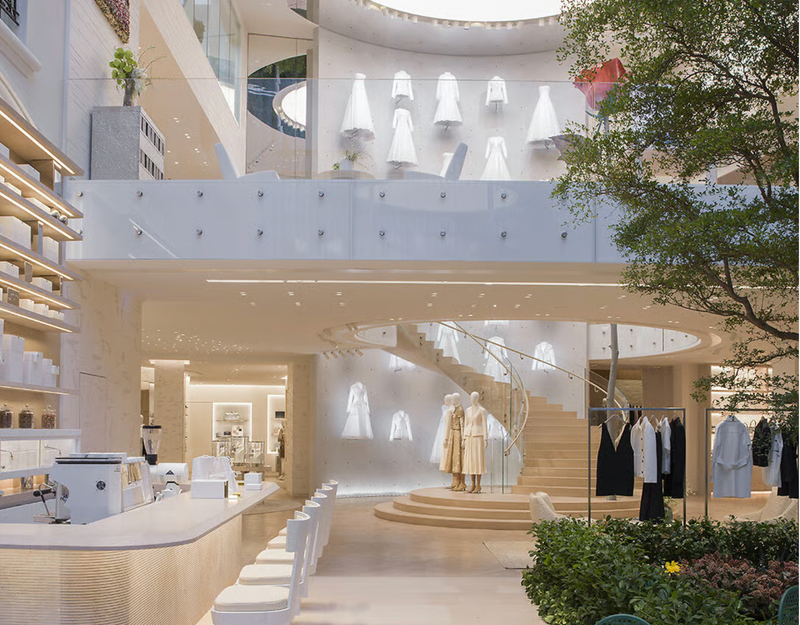
Peter Marino begins with the building itself. Behind the Via Monte Napoleone façade, the architecture alternates between stone, warm woods, metal, greenery, terraces, and secluded courtyards, letting the historic address breathe between the fashion floors. That dialogue becomes more intimate upstairs. Private salons borrow the proportions and refinement of a Milanese residence, while a dedicated beauty room pulls perfume and skincare into the same private setting. Dior’s codes remain unmistakable, yet Marino filters them through Milan’s instinct for interiors: disciplined, tactile, and exact.
Michelangelo Pistoletto’s portrait of Christian Dior places the Founder inside a distinctly Italian artistic language, while works and collectible furniture punctuate the rooms with the confidence of a private collection.
By the time you reach the upper floors, the reference to 30 Avenue Montaigne becomes quieter and more personal. Paris supplies the memory. Milan changes the attitude.
Jonathan Anderson Sets the Fashion Tempo
That shift in attitude suits Jonathan Anderson perfectly. House of Dior Milan becomes one of the first major permanent addresses to frame his Dior beyond the runway. Ready-To-Wear sits beside bags, shoes, fine jewelry, watches, La Collection Privée, and Dior Maison.
Familiar Dior creations are pulled into new proportions. Heritage codes collide with unexpected references. Romanticism meets restraint; elegance acquires wit.
Inside Milan, those ideas gain architectural context. A jacket belongs beside a piece of furniture. A bag sits within sight of contemporary art. Fragrances are part of the same conversation as jewelry and interiors.
For private clients, the upper salons shift the experience again. Appointments are quieter, collections can be viewed away from the main floors, and the Maison starts to resemble the old Dior ritual of being received personally rather than simply passing through a flagship.
Enrico Bartolini Puts Dior on the Plate
The final act belongs to Enrico Bartolini. Italy’s most Michelin-starred chef presides over Monsieur Dior, Dior’s first restaurant in the country, translating the Maison through flavor, texture, color, and presentation.
The references are precise. Houndstooth Soufflé turns the graphic motif into dessert. Grand Soir Chocolate borrows its name from La Collection Privée. Elsewhere, Bartolini works with beetroot, Gorgonzola, citrus, fruit, and chocolate through compositions that echo Dior without slipping into costume. Peter Marino carries the visual narrative into the restaurant, while Francesco Clemente’s botanical work introduces another Italian voice. Fashion has disappeared from the rack, yet Dior remains legible in the details.